
Subscribe and receive email notifications of new blog posts.
 RSS Feed
- 2026 | 18 Posts
- 2025 | 30 Posts
- 2024 | 48 Posts
- 2023 | 47 Posts
- 2022 | 48 Posts
- 2021 | 46 Posts
- 2020 | 37 Posts
- 2019 | 6 Posts
- 2018 | 1 Posts
4
National Garden Month: Start Planting Your Richmond Garden
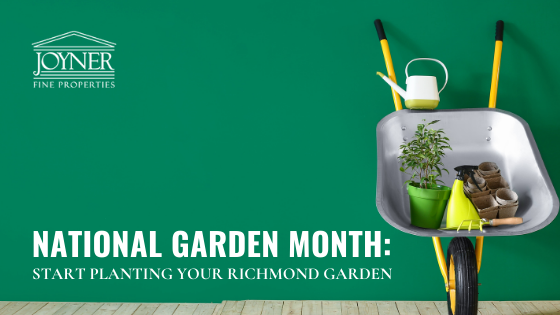
With spring just around the corner, trees and plants are showing signs of new growth, green leaves, and early blooms. Our real estate agents think it's the perfect time to get outside and plant your Richmond garden so that you can enjoy all the benefits of National Garden Month in April.
On a beautiful spring day, there's nothing quite like planting new seeds and watching them grow. If you're ready to give it a try, it's time to roll up your sleeves and turn your Richmond garden into something spectacular.
Planting Annuals and Perennials
April is a great month to plant annuals and perennials in your garden, but first, you should know the difference. Annuals have a lifespan of one year, so they must be replanted the following season. Perennials grow back every spring, so you only need to plant them once.
Annuals
Planting annuals in garden beds or pots marks the beginning of a season-long show of eye-catching flowers. Annuals are usually planted during the spring and summer months, unfurling flowers and colorful foliage until frost arrives. Some annuals thrive in the sun, and others prefer shade and cooler temperatures, Before planting annuals, it's best to check planting, growth, and care requirements with a local garden center.
Perennials
Perennials can be planted any time during the growing season until the ground freezes, but for best results, they should be planted during spring or fall. Since perennials come back each year, many are bulbs rather than small plants. Whether you plant spring or fall perennials, they need plenty of room to grow and spread in your garden. Even without visible foliage, perennials will still send out roots underground until they go dormant when the ground freezes.
Planting Vegetable Gardens
If you enjoy cooking, you may want to plant a vegetable garden that fills your yard with color and provide herbs and veggies for the kitchen. Just like flower gardens, vegetable gardens can be planted in the spring and the fall.
Spring Planting
Eggplant, peppers, and tomatoes can be started indoors then transplanted into the garden in late April.
If you like the idea of growing yummy summer vegetables, you should start planting your garden in mid-April. Imagine your endless cooking possibilities with a vegetable garden filled with asparagus, beans, broccoli, cantaloupe, carrots, corn, cucumbers, okra, and squash.
Garden Maintenance
Proper maintenance is essential to keep your flower and vegetable gardens blooming and healthy. Here are some helpful tips:
-
Mulch garden beds early in the spring
-
Apply a light application of 10-10-10 fertilizer over perennial beds
-
Deadhead perennials after flowering to extend bloom times
-
Cut back and fertilize spring-flowering shrubs after flowering
-
Weed your garden beds every week during the growing seasons
-
Keep your gardening tools, hoses, and sprinklers in good condition
All flower and vegetable gardens are subjected to a variety of harmful pests that can destroy plants. You can protect your gardens with organic pest control products and barriers made from fabrics, fencing, or mesh around the planting area. Diatomaceous earth, a non-toxic natural product, hinders the movement of pests in and around fruits, vegetables, and flowers.
For information on Richmond homes for sale, contact us to discuss your lifestyle needs and see available properties.

|
 |
